

An international conference that heard about an AddenbrookeÎÚÑ»´«Ã½ invention that can save babies lives received a surprise input from two unexpected guests – the parents of one of the first babies to benefit from it.

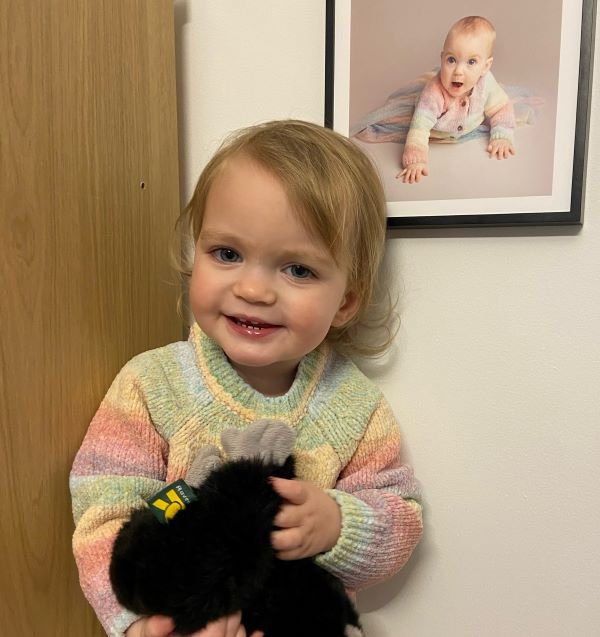
James and Nicola Hunt, whose daughter Aurelia was born prematurely at Colchester Hospital, joined the UK-India Healthcare Convention in London remotely to explain their positive experience of LocANTS.
The cloud-based platform remotely parachutes experts from Cambridge into hospitals that need extra clinical help. They can monitor equipment, examine scans and X-rays, review medication and advise clinicians and parents.
It saves babies being transferred elsewhere to specialist centres and families being parted at a highly stressful time– particularly if there are other young children involved.
Before the conference James explained:
It was a huge relief that the technology existed. Had it been different, it would have completely blown our family life for a couple weeks. It was hard enough already and it would have made it even harder.
James Hunt
Guest at SaturdayÎÚÑ»´«Ã½ (20 April) conference in Wembley Park watched as for the first time ever LocANTS, was demonstrated outside an ÎÚÑ»´«Ã½ setting.
Consultant neonatologist Dr Sajeev Job set up a remote meeting with consultants from Kings College, London, and Bedford Hospital, and junior doctors from Royal Berkshire Hospital and Newcastle.
They demonstrated how a point-of-care echocardiography – a scan used to look at the heart and nearby blood vessels - could be done by a non-expert in a district general hospital and interpreted by a cardiologist in a specialist tertiary centre to make the right decision.

Watching were inventors, consultant paediatrician and neonatologist, Dr Arun Dhar, and London-based entrepreneur and IT consultant, Ranadip Chatterjee. They were on hand to answer questions with AddenbrookeÎÚÑ»´«Ã½ director of innovation and consultant neonatologist, Dr Sue Broster.

Dr Broster also joined a panel discussion on ‘Getting the fruits of innovation to the masses - addressing the next billion user challenge’.
Dr Dhar said: “The event had a high-profile audience and the demonstration generated much attention from the leaders in public and private hospitals in India.
“Consultants from other ÎÚÑ»´«Ã½ trusts also expressed their interest and there were discussions about how LocANTS can be used in other contexts besides new-born babies. These included A&E, psychiatry and acute adult medicine.
We would like to thank all distinguished guests who listened, or helped us, with the demonstration and in particular little AureliaÎÚÑ»´«Ã½ parents.They are an excellent example of what drives us to develop this advanced technology.
Dr Arun Dhar

Progress on LocANTS coincides with plans for the new , which will be the first of its kind in the East of England.